
Language
Views: 0 Author: Site Editor Publish Time: 2026-05-20 Origin: Site


Selecting the right polymer often makes or breaks a manufacturing run. Material choice directly dictates the commercial viability, mechanical success, and regulatory compliance of any molded part. Engineers and product designers constantly face intense pressure to match chemical properties to real-world demands. You cannot simply pick a polymer based on raw material prices. Choosing incorrectly often leads to costly tooling modifications, catastrophic part failures, or severely delayed time-to-market.
The processing behaviors, shrinkage rates, and environmental tolerances play a massive role in end-use performance. We move beyond basic definitions in this guide. You will learn an evidence-based evaluation framework for selecting the right polymers. We balance engineering specifications alongside unit economics to ensure your project succeeds from the first shot. This article provides a comprehensive look at the foundation of modern manufacturing, helping you align technical requirements with practical realities.
Thermoplastics dominate the industry, with ABS, Polypropylene (PP), and Polycarbonate (PC) serving as the most versatile baseline options.
Material selection must map directly to environmental, mechanical, and compliance outcomes (e.g., FDA, ISO 10993).
Implementation reality: Material shrinkage rates and processing behaviors directly impact mold design and long-term tooling wear.
Finalizing materials of plastic injection moulding requires prototyping and a formal decision matrix weighing cost against performance limits.
Before evaluating specific resins, we must distinguish between the two primary polymer families. This fundamental choice dictates your entire manufacturing strategy.
You can melt, mold, and remelt thermoplastics multiple times. Applying heat softens the material. Cooling hardens it back into a solid state. This reversible physical change makes them incredibly popular. They represent the vast majority of commercial Plastic Injection Moulding projects today. Thermoplastics offer unmatched scalability and excellent post-consumer recyclability. Manufacturers can easily grind up scrap parts and reintroduce them into the production hopper. This reduces waste and improves overall unit economics.
Thermosets behave quite differently. They undergo a permanent chemical change during the curing process. Once you mold a thermoset, cross-linking occurs between the polymer chains. You cannot melt it down again. Applying extreme heat will simply cause the material to burn or degrade. Manufacturers use thermosets for high-heat and high-stress applications. Examples include epoxy resins, polyurethanes, and liquid silicone rubber (LSR). While they offer superior thermal stability, they entirely lack post-molding recyclability.
Decision Lens: Default to thermoplastics for standard projects. Their versatility, cost-effectiveness, and recyclability make them ideal for most consumer and industrial goods. Only specify a thermoset when extreme thermal stability or specific chemical resistance mandates it.
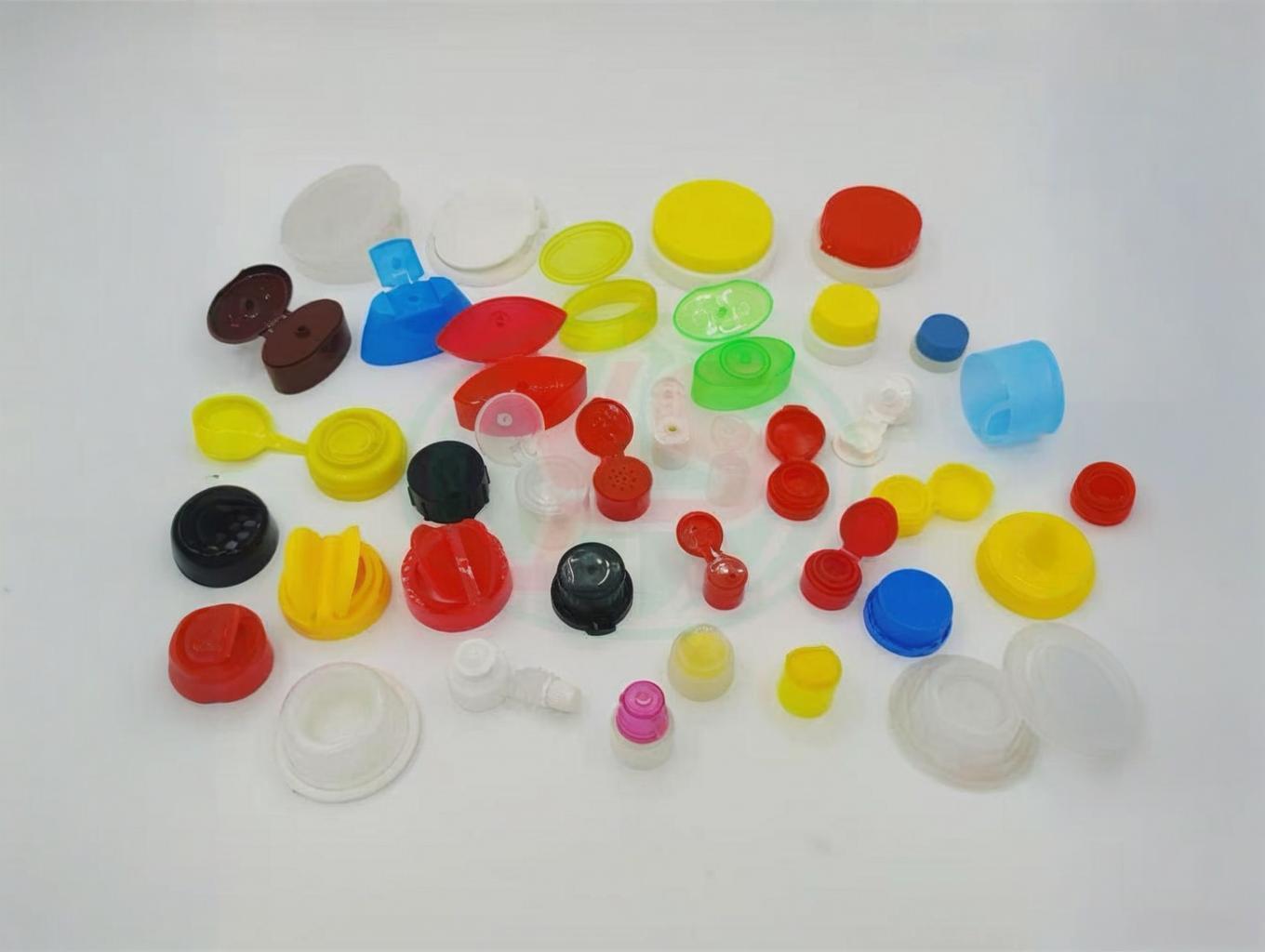
When selecting Materials of Plastic Injection Moulding, you must weigh features against functional outcomes. Every resin carries specific cost-efficiency metrics and objective limitations. Below is a detailed breakdown of the industry's most common choices.
ABS remains a staple in manufacturing. It combines the strength and rigidity of acrylonitrile and styrene polymers alongside the toughness of polybutadiene rubber.
Outcomes: It offers high impact resistance and an excellent surface finish. You can machine, paint, or glue ABS very easily. It serves well for consumer electronics enclosures and automotive interior trims.
Trade-offs: ABS exhibits poor weatherability. It suffers from rapid UV degradation if deployed outdoors without protective additives. It is also prone to warping in thick sections during the cooling phase.
PP is a highly versatile, semi-crystalline thermoplastic. It balances moderate strength alongside exceptional chemical resistance.
Outcomes: It boasts incredible fatigue resistance. This makes PP the undisputed champion for "living hinges" on bottle caps or containers. It provides excellent moisture resistance and remains very low cost.
Trade-offs: You will find PP difficult to bond or glue. It resists adhesives naturally. It is highly flammable without additives and remains susceptible to UV degradation over time.
Engineers choose PC when applications demand transparency and brute strength. It is a premium engineering grade thermoplastic.
Outcomes: It delivers exceptional impact strength and optical clarity. PC acts as a shatter-resistant alternative to glass. It also features a high heat deflection temperature, holding its shape in hot environments.
Trade-offs: PC remains prone to scratching. It requires high processing temperatures, which increases energy costs. Additionally, PC can stress-crack abruptly upon prolonged chemical exposure to certain solvents.
POM, widely known as Acetal, bridges the gap between metals and plastics. It offers remarkable engineering properties for moving parts.
Outcomes: It provides high stiffness and incredibly low friction. This makes POM ideal for gears, bearings, and sliding mechanisms. It also maintains excellent dimensional stability across various temperatures.
Trade-offs: Acetal is notoriously difficult to cosmetically paint or bond. Adhesives struggle to grip its slick surface. Furthermore, it exhibits a high shrinkage rate, complicating precision mold design.
Nylon represents a family of synthetic polymers known for rugged durability. Manufacturers often blend it with glass fibers to boost its mechanical limits.
Outcomes: PA offers high mechanical strength and outstanding wear resistance. It tolerates continuous friction and resists many harsh chemicals, making it suitable for under-the-hood automotive parts.
Trade-offs: Nylon is highly hygroscopic. It absorbs ambient moisture rapidly, which drastically affects its dimensional stability. Processors must follow strict drying protocols before melting it.
Material Comparison Chart
Material | Primary Strength | Major Limitation | Best Use Case |
|---|---|---|---|
ABS | Impact resistance, aesthetics | UV degradation | Consumer electronics |
PP | Fatigue resistance (living hinges) | Hard to glue/bond | Packaging, caps |
PC | Optical clarity, extreme impact | Stress-cracking, scratching | Lenses, safety gear |
POM (Acetal) | Low friction, high stiffness | High shrinkage rate | Gears, bearings |
PA (Nylon) | Wear resistance, strength | Hygroscopic (absorbs moisture) | Automotive components |
Selecting a polymer involves far more than checking basic datasheets. You must build a comprehensive decision matrix to weigh competing variables. Focus on aligning the material properties strictly against the end-use environment.
Engineers primary look at Tensile Strength and Impact Strength. Tensile strength measures a material's resistance to stretching or being pulled apart (often tested via ASTM D638). Impact strength measures shock resistance, determining how much energy a part absorbs before fracturing. You must match these figures to the real-world physical abuse the product will face.
Evaluate the Heat Deflection Temperature (HDT). This metric indicates the temperature at which a polymer deforms under a specific load. You must also map resistance against common environmental hazards. Will the part face exposure to continuous UV sunlight? Will it contact industrial solvents, acidic cleaning agents, or automotive fuels? Failure to account for chemical exposure leads to rapid material degradation.
You must balance raw material cost-per-volume alongside production cycle times. Cheaper resins might seem attractive initially. However, they might require significantly longer cooling times in the mold. Extended cooling times slow down production, neutralizing any upfront raw material cost advantage. True scalability demands a holistic view of the per-part production cost.
Assess whether the material accepts post-processing smoothly. Does it require secondary painting, or can it accept colorants directly in the hopper? Some materials replicate mold texturing beautifully, while others tend to show sink marks and flow lines. Prioritize resins offering a high aesthetic yield straight out of the press.
Standard Decision Matrix Table
Evaluation Dimension | Key Metric to Check | Common Standard |
|---|---|---|
Tensile Strength | Yield stress before stretching | ASTM D638 |
Thermal Limits | Heat Deflection Temp (HDT) | ASTM D648 |
Impact Resistance | Energy absorbed before breaking | Izod Impact Test |
Flammability | Burn rate and self-extinguishing | UL 94 |
Certain industries impose strict regulatory hurdles. Material choice transitions from an engineering preference to a strict legal compliance issue.
The healthcare sector demands flawless execution. Evaluating materials for biocompatibility (specifically ISO 10993) is non-negotiable. You must also verify sterilization resistance. Can the polymer withstand high-pressure steam autoclaves, ethylene oxide (EtO) gas, or aggressive gamma radiation without losing structural integrity? Manufacturers regularly specify FDA-grade certifications for medical Plastic Injection Moulding. Common choices include medical-grade PEEK, specialized Polycarbonate, and carefully vetted cyclic olefin copolymers (COC).
Transportation industries require strict strength-to-weight ratios to improve fuel efficiency. They also mandate rigorous flame retardancy. Resins typically must achieve UL 94 V-0 ratings to ensure passenger safety. Furthermore, under-hood components demand intense chemical resistance to hydraulic fluids, engine lubricants, and corrosive brake fluids.
Food and beverage packaging faces intense public scrutiny. Materials must be fundamentally food-safe and strictly FDA compliant. You must mandate BPA-free resins for items like water bottles or food storage containers. Additionally, these materials must offer a high aesthetic yield to appeal to retail consumers.
Theoretical properties matter very little if a material proves impossible to mold efficiently. Production realities dictate much of the final decision.
Different materials shrink at vastly different rates upon cooling. Semi-crystalline materials like POM shrink significantly more than amorphous materials like PC. Changing a material after a steel mold is cut often requires expensive tooling modifications. If you switch from a high-shrink to a low-shrink resin, the final dimensions will be entirely incorrect. Always finalize your material before cutting hard steel.
Adding reinforcement fibers radically changes a polymer's abrasiveness. Glass-filled or carbon-filled materials, such as Glass-filled Nylon, act like liquid sandpaper inside the mold. They will rapidly degrade soft aluminum (P20) tooling. If you plan to run abrasive materials, you must invest in harder, more expensive steel molds up front to prevent premature tool failure.
Many robust polymers are highly hygroscopic. Nylon, PET, and Polycarbonate eagerly absorb moisture from the surrounding air. Failure to properly dry these materials before melting leads to catastrophic cosmetic and structural defects. Processors will see splay (silver streaks), internal voids, and severely compromised mechanical integrity. Strict desiccant drying protocols are mandatory.
Moving from a broad list to a final selection requires a systematic approach. Follow these steps to lock in your material.
Define Success Criteria: Rank your mechanical, environmental, and cosmetic needs in strict order of priority. Decide which variables are absolute necessities versus nice-to-have features.
Cross-Reference Data: Rely entirely on objective engineering Technical Data Sheets (TDS). Ignore generic marketing claims. Use the TDS to directly compare shrinkage rates, HDT, and melt flow indexes across different vendors.
Prototyping: Validate your engineering assumptions early. Use 3D printing or CNC machining in the target material (or its closest equivalent). Test this prototype under real-world conditions before committing capital to injection molding tooling.
Consult a Manufacturing Partner: Engage with experienced tooling engineers as early as possible. Run comprehensive Design for Manufacturability (DFM) checks on your shortlisted resins. They can spot flow issues or shrinkage problems long before production begins.
Successful part production relies entirely on aligning specific material properties alongside both end-use applications and manufacturing realities. You cannot treat polymer selection as an afterthought. From standard thermoplastics to advanced engineering resins, each option carries unique mechanical strengths and distinct processing hurdles.
We strongly advise against isolating raw material costs from processing costs. Cheaper resins often introduce longer cycle times, higher rejection rates, or premature tooling wear. These hidden processing challenges easily erase upfront savings. Prioritize a holistic view of your production environment.
Take action today to secure your project's success. We encourage you to request a comprehensive DFM analysis early in your design phase. Consult directly with an experienced engineering team to finalize your material selection, validate your shrinkage assumptions, and request a detailed production quote.
A: Polypropylene (PP) and Polyethylene (PE) are generally the most cost-effective by volume. However, you must look beyond raw prices. Extended cycle times, high shrinkage rates, and required tooling complexity can heavily affect your final per-part cost.
A: Yes, but only if the new material features the exact same shrinkage rate. If the new shrinkage rate differs, your final part dimensions will be incorrect. Fixing this requires costly and time-consuming mold modifications.
A: High-performance engineering polymers like PEEK offer incredible strength. Alternatively, glass-filled variants of Polycarbonate (PC) and Nylon (PA) provide some of the highest tensile and yield strengths available for commercial molding.
A: Choose ABS for better cost-efficiency and easier processing in standard indoor environments. It finishes and paints beautifully. Choose PC if your application strictly requires superior impact resistance, optical clarity, or significantly higher heat tolerance.


