
Language
Views: 0 Author: Site Editor Publish Time: 2026-05-28 Origin: Site


Sourcing a standard industrial mould is a straightforward mechanical procurement exercise. Sourcing a Medical Mould is a complex regulatory and risk-mitigation partnership. For medical devices, the physical tooling represents only half the final deliverable. A true medical tool must be inherently verifiable. It must integrate seamlessly into stringent cleanroom environments. Furthermore, it needs to prove its own dimensional consistency across million-cycle production runs without performance degradation.
We designed this guide to help you navigate these critical requirements. You will learn to evaluate specific manufacturing standards and manage capital expenditures effectively. We aim to provide technical buyers, engineering leads, and procurement teams with a definitive, evidence-backed framework. You can use this knowledge to vet potential manufacturing partners thoroughly and secure compliant, high-performance production tooling.
Documentation is the product: A high-precision mould without exhaustive IQ/OQ/PQ validation data is effectively non-compliant.
Cpk over FAI: First Article Inspection (FAI) passes are insufficient; medical moulds must demonstrate a Process Capability Index (Cpk) of ≥ 1.00 to prove consistency is built into the tool, not inspected post-production.
Tolerance strategy dictates cost: Over-tightening non-critical dimensions exponentially inflates tooling costs and validation timelines.
Cleanroom tooling requires unique engineering: Medical moulds demand hardened stainless steel, lubricant-free guiding systems, and specialized surface finishes to prevent contamination.
Physical dimensions alone do not qualify a tool for healthcare applications. Systemic compliance frameworks dictate exactly how a medical tool must perform. We must move beyond simple part measurements and focus heavily on continuous process verification.
Medical manufacturing demands strict Quality Management Systems (QMS) compliant with ISO 13485. This standard requires lot-level traceability for every resin batch used. It also mandates continuous environmental monitoring. If a defect occurs post-market, you must be able to trace it back to the exact production hour, material lot, and machine operator. Without a robust QMS, this level of forensic traceability is impossible.
Process validation separates a basic manufacturer from a true medical partner. You must document every phase of the injection process.
Installation Qualification (IQ): This phase verifies the equipment meets all design specifications upon initial installation. Engineers check wiring, safety features, calibration states, and software versions to ensure proper setup.
Operational Qualification (OQ): Engineers test the upper and lower parameter windows here. They manipulate temperature, pressure, and injection speed to find the absolute limits where the tool still yields acceptable parts. This establishes a safe operating envelope.
Performance Qualification (PQ): This phase proves the tool consistently produces compliant parts at scale. The machine runs under normal, nominal operating conditions for an extended duration. It validates long-term stability.
Many industrial buyers rely on First Article Inspection (FAI) to approve a tool. In the medical sector, isolated part measurements are inadequate. You must shift your focus toward statistical process control (SPC). A compliant tool inherently restricts variations to maintain a Process Capability Index (Cpk) of 1.00 or higher. This statistical proof guarantees the design controls variation naturally.
Modern regulatory environments demand perfect data integrity. FDA 21 CFR Part 11 compliance outlines the rules for electronic records and signatures. You need electronic batch records integrated directly into a Manufacturing Execution System (MES). This integration prevents manual data tampering and ensures secure, reliable documentation during every production cycle.
Structural and material choices differentiate industrial tooling from medical-grade tooling. You cannot treat these two categories interchangeably.
Standard P20 steel works well for consumer goods, but medical volume production requires much higher durability. You must select hardened stainless steels like 420 SS or S136. These premium alloys withstand aggressive venting pressures and high-cavity wear. More importantly, they resist corrosion during the frequent, rigorous chemical wipe-downs required in medical environments.
Operating a mould inside an ISO Class 7 or 8 cleanroom requires special mechanical adaptations. You must completely eliminate traditional greases, which easily contaminate sterile environments.
Lubrication-free mechanics: Engineers utilize specialized surface coatings, such as Titanium Nitride. They also deploy self-lubricating graphite plugs for slide and lifter mechanisms.
Particulate control: The design must incorporate enclosed gating and precision venting. This prevents plastic particulates and off-gassing from entering the cleanroom atmosphere.
Feature | Standard Industrial Tooling | Medical-Grade Tooling |
|---|---|---|
Core Material | P20 or standard carbon steel | Hardened Stainless (S136, 420 SS) |
Lubrication | Standard industrial grease | TiN coatings, self-lubricating graphite |
Tolerances | Blanket ±0.05mm | Strategic ±0.01mm on critical features |
Validation | Basic FAI (First Article Inspection) | Full IQ/OQ/PQ protocol, Cpk ≥ 1.00 |
A common mistake engineers make is applying blanket tight tolerances across the entire 3D model. Applying strict tolerances (±0.01mm) to every surface exponentially inflates costs. You should apply these tight limits only to critical-to-function features, such as fluid seals, mating mechanisms, and luer locks. This strategy optimizes manufacturing yields while limiting unnecessary scrap.
Design for Manufacturability (DFM) must occur before cutting any steel. Early intervention eliminates draft angle deficits that cause part sticking. It fixes uneven wall thicknesses to prevent structural sink marks. It also determines optimal gate placements to avoid structural weld lines in critical stress areas. We view DFM as an ongoing dialogue, not a basic checklist.
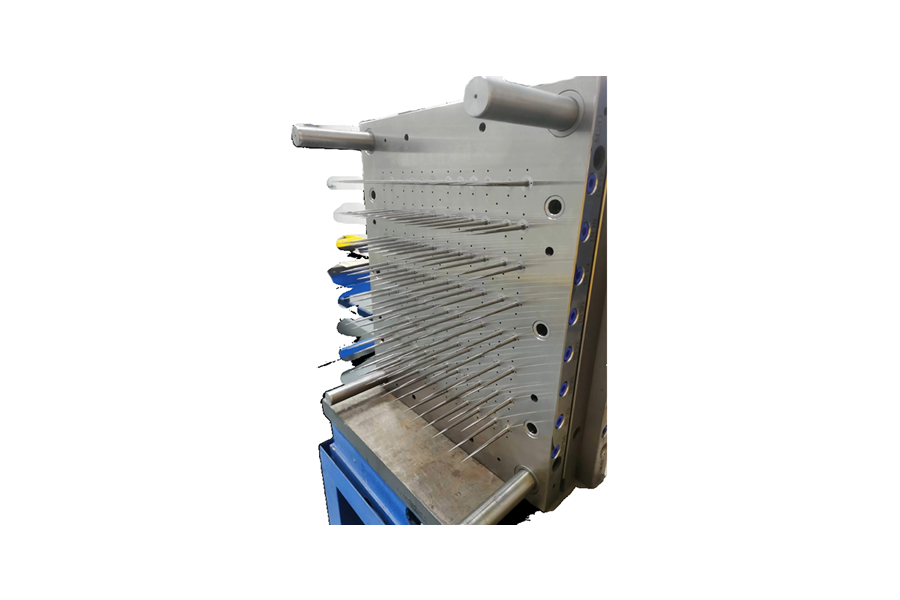
Factory Acceptance Testing (FAT) and Site Acceptance Testing (SAT) protect your investment. Buyers should use a granular, engineering-level checklist to physically evaluate the delivered tooling.
The exterior of the tool reflects the precision of its interior. Nameplates must be permanently riveted to the base. Cooling water nozzles must be recessed to a depth of ≤ 3mm to prevent transit damage. Furthermore, technicians must clearly stamp IN/OUT markers beside every nozzle to prevent improper thermal setups during shift changes.
Aggressive ejection scars parts and creates biological traps for bacteria. To prevent this, slanted ejectors must sit exactly 0.1-0.15mm below the core surface. This ensures ejection marks protrude safely without digging into the device housing. Additionally, all sliding components must undergo nitriding. This surface hardening treatment brings the steel to approximately HV700 hardness, ensuring immense longevity and preventing galling.
Improper melt temperature degrades medical polymers, compromising their structural integrity.
Cold Runners: Manufacturers must polish cold runner channels to a ▽1.6-▽3.2 standard. This high polish eliminates material hang-ups and reduces shear stress on the resin.
Hot Runners: You must mandate precision J-type thermocouples for accurate temperature feedback. Sealed nozzle tips prevent drooling. Finally, the design requires adequate air-gap insulation—typically 25-40mm—between the heating plates and the base. This gap prevents radiant heat from prematurely degrading the resin.
Understanding cost structures helps you justify capital expenditures and evaluate quote variances effectively. Transparency is key during the Request for Quote (RFQ) process.
High-cavitation micro-tools require exponential CNC and EDM precision. Naturally, pushing from 4 cavities to 32 cavities dramatically increases the steel cost and machining time. Buyer Tip: If you are running prototypes or low-volume clinical trials, utilize shared mould bases (Master Unit Die or MUD inserts). This strategy cuts upfront machining costs significantly while still proving out the cavity geometry.
Many buyers express surprise when they see the validation line item. The validation process requires rigorous IQ/OQ/PQ execution, Gauge R&R studies, and Design of Experiments (DOE) analysis. It demands weeks of dedicated engineering time. This paperwork and testing protocol often accounts for a significant percentage of the total project cost. Remember, the documentation guarantees the product's safety.
Press size influences hourly operational rates. Engineers size the press based on clamping force requirements, the material's Melt Flow Index (MFI), and the projected part area. We generally recommend the 2.5x rule: multiply the part's total projected surface area (in square inches) by 2.5 to determine the baseline tonnage required. Oversizing the press wastes energy, while undersizing it causes flash defects.
Incomplete data leads to padded quotes. Manufacturers add buffer pricing when they face unknown variables. You can prevent this by providing comprehensive data upfront. Follow this numbered checklist when submitting an RFQ:
Detailed 2D Prints: Highlight critical tolerances and specify exact surface finishes (e.g., SPI A2).
Native 3D Models: Provide step files without unresolved surfaces.
Material Specifications: List the exact resin grade and specific ISO 10993 biocompatibility requirements.
Lifecycle Volume Expectations: State the annual volume and the total expected lifecycle. This helps the vendor choose the correct steel hardness.
Knowing how to spot pretenders versus specialized medical manufacturers saves time and mitigates severe compliance risks. Vendor vetting requires a structured approach.
An ISO Class 7 cleanroom is merely infrastructure. You can buy cleanroom space, but you cannot buy instant engineering culture. The true differentiator is human capital. Ask whether the partner employs dedicated process engineers specifically for validation protocols. Many standard shops rely solely on setup technicians. Setup technicians know how to start a machine, but process engineers know how to prove statistical control over a system.
Avoid suppliers using retrofitted standard industrial machines for medical runs. True medical injection requires advanced equipment. You need closed-loop servo controls to guarantee repeatable shot sizes. You also need cavity pressure monitoring to detect micro-variations in real time. Standard machines often use open hydraulic systems that leak particulate and vapor into the cleanroom. Medical manufacturing demands specialized, non-contaminating electric or hybrid presses.
Assess how a vendor handles DFM feedback. A weak partner treats DFM as a one-time checklist to rush into tooling. A competent partner approaches it as an ongoing technical dialogue. They will actively push back on designs that compromise manufacturability. If a vendor agrees to every difficult geometry without asking questions, they likely lack the experience to foresee the production issues.
Evaluate the risks associated with fragmented supply chains. Sometimes a tool is designed in one location, cut in another facility, and validated in a third. This hand-off process creates massive accountability gaps. When defects arise, subcontractors often blame each other. You should prioritize single-source accountability. A partner who designs, cuts, validates, and runs the tool under one QMS assumes full responsibility for the outcome.
Sourcing a medical production tool requires evaluating a supplier's engineering rigor, validation infrastructure, and adherence to physical tooling standards. The physical steel is meaningless without the statistical proof backing its performance. Do not treat this process as a simple transaction; treat it as building a long-term compliance engine.
Your next steps should be highly proactive. First, advise your quality team to audit potential suppliers' QMS directly. Second, request to review a sanitized IQ/OQ/PQ protocol from one of their past projects to verify their documentation standards. Finally, initiate a preliminary DFM review with their engineering team before committing to any major capital expenditure.
A: A medical tool uses hardened, cleanroom-ready materials like stainless steel to prevent corrosion. It features lubrication-free mechanics to eliminate contamination. Most importantly, it requires exhaustive validation data (IQ/OQ/PQ) and high statistical process control metrics to prove long-term consistency. Standard industrial tools lack these rigorous documentation and environmental controls.
A: Validation typically adds 4 to 8 weeks to the project timeline. This includes progressing methodically through the IQ, OQ, and PQ phases. Engineers must dial in parameter windows, run long-term stability tests, conduct metrology on sample parts, and compile massive documentation packets before the tool is approved for mass production.
A: Yes, but it is highly complex. Moving a validated tool triggers stringent regulatory change-control procedures. Because the original validation is tied to the specific machines and environment of the first facility, you must execute a complete re-validation (new IQ/OQ/PQ) at the new location before resuming production.
A: We protect IP through secure data transfer protocols and strict Non-Disclosure Agreements (NDAs). Furthermore, reputable manufacturers utilize compartmentalized manufacturing processes and access-controlled digital networks. This ensures only authorized engineering personnel view your proprietary 3D models and technical blueprints.


