
Language
Views: 0 Author: Site Editor Publish Time: 2025-11-06 Origin: Site


A medical mould helps make medical devices in the right shape and size. You need to be very exact and careful because medicine has strict safety rules. Medical moulds use special materials and are made in clean rooms to protect people. This is much more than what other industries do. New technology and custom designs help you make Injection Moulds for many medical uses. Taizhou Huangyan Yongsheng Mold Industry Co., Ltd. makes medical moulds for things like syringes and tubes.
The world market for medical injection molding was USD 22.54 billion in 2023.
Experts think it will grow to USD 33.28 billion by 2030, with a 5.8% yearly growth rate.
Custom designs help meet special patient needs and make medical care better.
Medical moulds help make safe and exact medical tools like syringes and tubes. They must follow strict rules to keep patients safe.
The medical injection molding market is growing fast. It may reach USD 33.28 billion by 2030. This shows more people want high-quality medical products.
New technology, like automation and 3D printing, makes medical moulds better and faster to make. This helps patients get better care and saves money.
Picking the right materials for medical moulds is very important. Biocompatible plastics make sure the tools are safe and last long. This helps stop problems for patients.
Custom designs in medical moulding give special solutions for each patient. This makes medical treatments work better.
A medical mould shapes parts for medical devices. It helps make things like syringes and tubes. Doctors and nurses use these items every day. Making these parts needs to be very exact. Even small mistakes can be dangerous for patients. There are strict rules in medicine. Groups like the FDA and ISO set these rules. They make sure products are safe and good quality. The place where you make these parts must be very clean. This stops germs from getting in. Medical moulds are not the same as moulds in other jobs.
Medical moulds must be very exact because they are used for important medical jobs. Good quality and accuracy help keep patients safe and help doctors treat people well.
Medical moulds have special features that make them different. Here is a table that shows how they are not like other moulds:
Characteristic | Medical Moulds | Other Industrial Moulds |
|---|---|---|
Material Requirements | Must meet strict biocompatibility and chemical resistance | Varies based on application |
Compliance | Must adhere to FDA regulations and ISO standards | Compliance varies, often less stringent |
Precision and Safety | High precision and safety standards are critical | Precision may not be as critical |
Medical moulds use special materials. These materials do not react with medicine or people. You must follow strict rules to keep everyone safe. Here are some things you should remember:
Medical products must follow FDA rules.
ISO standards are important in medicine.
Clean and careful work stops germs from spreading.
Every step in making these parts must be easy to check. Sensors watch the process and collect data. Computers save records of what happens. This helps you find problems fast. If something goes wrong, you can recall only the bad products.
Quality control is very important. You test parts in different ways to find mistakes. Computer programs help you see problems before you start making things. You check your machines, watch how things are made, and test finished parts to make sure they work.
Following strict quality rules is very important when making medical moulds. This lowers risks and makes sure devices work well. You need to be very exact so medical products fit and work right for patients.
Medical moulds help you make products that cost less and work well. They help doctors and nurses give safe care to patients.
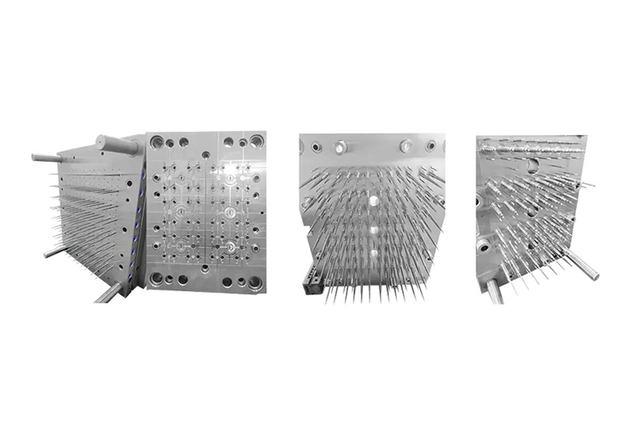
Medical injection molding is used in hospitals and clinics. This process makes medical parts fast and with great accuracy. Doctors and nurses need these parts every day. Some examples are:
Syringes for giving medicine
IV parts for patient care
Tools for surgery
Equipment for testing
Medical injection molding helps you make parts with exact shapes. You can make thousands of parts quickly. Multi-cavity molds let you make many parts at once. This helps you work faster and spend less money.
Feature | Single-Cavity Molds | Multi-Cavity Molds |
|---|---|---|
Parts Produced per Cycle | 1 | 8 (or more) |
Cycle Time | Longer | Shorter |
Production Efficiency | Lower | Higher |
Cost per Unit | Higher | Lower |
Multi-cavity molds are used for tube moulds and syringe moulds. Yongsheng Mold Industry makes molds with up to 128 cavities. You can pick the size and number of cavities you need. These molds use strong steel like S136 and StaVaxS420. The parts have smooth surfaces from mirror polishing. The molds last for millions of uses.
Multi-cavity molds help you make more parts faster. You save money and keep every part high quality.
New technology makes medical injection molding better. Automation and robots help control the process. Machines do hard jobs and make fewer mistakes. Computer-aided design and 3D printing help you make special parts for patients. The parts fit well and work right.
Medical plastic molding is important for safe and strong medical parts. You use it to make molds for syringes, tubes, and other devices. This process gives you smooth surfaces and tight seals. These features help give medicine safely and care for patients.
Medical plastic molding makes syringes with the same size every time. You get smooth use and tight seals for medicine.
You make light and strong parts. Doctors and nurses find them easy to use.
You add safety features, like needles that pull back. This helps stop injuries.
Plastic injection molding makes labware, disposables, and care devices. Medical plastic molding makes sure every part is safe. You can make clean parts for surgery and single-use parts for easy throwing away.
Feature | Details |
|---|---|
Cavity | 1-72 |
Mould base material | P20, 45#, 4CR13, etc. |
Core & Cavity material | S136, 718, P20, 2378, 2316, 4CR13, P20, etc. |
Runner | Cold/Hot (LOCAL BRAND, HASCO, YUDO, HUSKY, etc.) |
Life time | 3,000,000 shots |
Quick T1 time | 25-40 days |
Package | wooden case |
Number of cavities | 6 cavities ~ 128 cavities |
Cavity core steel | using StaVaxS420 manufactured by Assab, Sweden |
Syringe size | 1~50 ml |
Needle mold life | at least 5 million mold |
Product plastic | TPE or medical PVC (if using PVC, we do not recommend the use of thermal guides) |
Cavity Core Polishing | Mirror Polishing |
Yongsheng Mold Industry gives you many mold choices. You can pick the best mold for your needs. You get fast and high-quality parts every time.
New technology and custom designs make medical plastic molding better. Automation helps you work faster and make fewer mistakes. Precise cutting and forming save materials and lower waste. Robots and 3D printing help you make parts that fit patients. The parts are safe, strong, and cost less.
Automation and custom designs help you make better medical parts. You get fast work and top quality for every part.
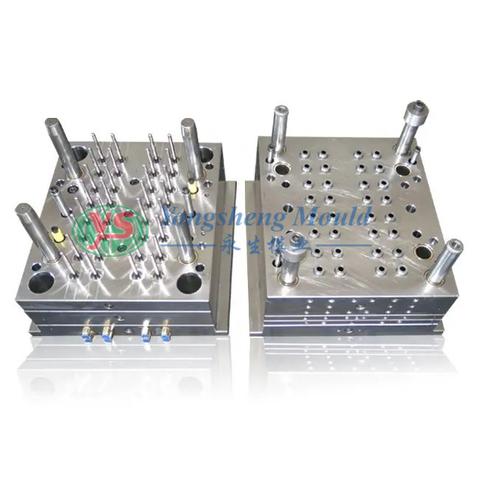
You must pick the right plastic for medical parts. The plastic should be safe and strong. In medical injection molding, you use plastics that are easy to shape. These plastics are also safe for people. They help make medical parts that last long and keep patients safe.
Here are some common plastics used in medical devices:
LDPE is flexible and does not soak up water. It is safe for people and good for tubes and soft parts.
TPE lets you choose how hard or soft it is. It does not react with chemicals and is safe for the body.
PP is tough and bends without breaking. You can clean it in many ways, so it is good for medical parts.
Other plastics are also used in healthcare. These include PE, PC, and PEEK. Each plastic has special features. They help you make strong and safe medical parts.
Material | Key Properties |
|---|---|
Polyethylene (PE) | Chemical resistance, durability and strength, flexibility, biocompatibility |
Polypropylene (PP) | Heat and chemical resistance, lightweight, rigidity, biocompatibility |
Polycarbonate (PC) | Impact resistance, optical clarity, biocompatibility, sterilization stability |
Polyetheretherketone (PEEK) | Exceptional strength, thermal stability, chemical resistance, biocompatibility, reliability |
You want your medical parts to be safe and strong. They should also be easy to clean. Biocompatibility and sterilizability are very important. These things help you avoid problems and keep medical parts working well.
Tip: Always choose plastics that fit your medical part’s needs. This helps you follow safety rules and makes your parts last longer.
You use new ways to make medical parts very exact. Medical injection molding uses new technology to make better parts.
Some new trends in making medical parts are:
High-precision injection makes small and detailed parts.
Robots and machines help make more parts with fewer mistakes.
AI checks each part for problems.
3D printing and CAD help make custom parts for each patient.
Micro-molding makes tiny parts for special devices.
New curing methods help silicone stick better and stay safe for people. Material science gives you new plastics like PEEK and ABS. These make medical parts stronger and last longer. Multi-material molding lets you use more than one plastic in a part. This makes medical parts safer and stronger.
Now, making medical parts uses less energy and makes less waste. Some plastics can be recycled. You can also reuse silicone scraps. These changes help protect the environment and still make good medical parts.
Medical injection molding helps you spend less money. You use less material, make more parts fast, and keep quality high. This makes it easier and cheaper to make lots of medical parts.
Note: Using new ways to make medical parts helps you save money and protect the environment.
Choosing the right medical mould helps keep patients safe. Each part made with medical injection molding must be very accurate. Even a small mistake can make a device not work. This could put a patient in danger.
In medicine, mistakes are not allowed. How well a device works can change how a patient does. That is why precision, quality, and good materials are so important.
Surgical instruments and equipment need to be made just right. Medical injection molding uses special machines for this. These machines make sure every part is the same size. Doctors can trust these tools for surgery and care.
Medical parts must be made to exact sizes.
Even tiny mistakes can cause problems.
Using good parts helps keep patients safe.
Precision injection molding uses careful checks to make sure parts are right. The parts fit and work as they should. This helps keep patients safe and gives better results.
You must follow strict rules to keep patients safe. Meeting these rules is not just a goal, it is required. Medical parts must pass tests to show they are safe and strong. You must prove every part meets FDA and ISO 13485 rules.
Following ISO 13485 and FDA rules is very important.
You must keep records and track every part.
Biocompatibility tests check if parts are safe for the body.
Quality checks make sure every part is safe.
You also need to follow local rules for medical devices. This helps you avoid problems and builds trust with doctors and patients. Surgical tools and other parts must be cleaned and sterilized. You make sure every part is safe to use in the body.
Yongsheng Mold Industry works hard to make high-quality medical moulds. Their team uses new technology to meet the highest standards. You can trust their products to keep patients safe and give doctors the tools they need.
Making medical moulds is hard. Some shapes are tricky to make. Complex designs can be too much for old tools. Sharp corners and deep undercuts are tough. These features make molding harder. You need special tools for these shapes. Special tools cost more money.
Complex shapes are hard for regular tools.
Sharp corners and deep undercuts make molding harder.
Special tools make production cost more.
You must fix these problems. Every part needs to be safe and meet strict rules.
New ideas help you solve many problems. Modern technology makes better medical moulds. Here is a table with some new ways:
Solution Type | Description |
|---|---|
Advanced Machining Methods | Fast graphite milling and hard milling shape tough metals. You make complex designs quicker. |
Modular Standardized Components | Mold bases and parts can be switched. You build and test moulds fast. You waste less material. |
Proactive Design Strategies | Computer simulations help you plan shapes before you start. You avoid expensive mistakes. |
Specialized Vendors and Services | Experts use new methods to make prototypes fast and well. |
You see new trends in medical moulding:
Micro molding makes tiny, exact parts for medical devices.
3D printing makes mold inserts with cool shapes and speeds up work.
Robots and machines handle small parts and lower germ risks.
Computer programs find problems before you make parts.
Micro molding helps you make small parts for new medical devices. You can make tiny, exact pieces. These parts help patients feel better and heal faster. Small devices mean less pain and shorter hospital stays. You can mold parts as small as three microns. You use strong materials like PEEK. This gives you more choices for design when you cannot use metal.
Micro molding is needed for tiny devices, like sensors and drug delivery systems. Exact shapes and safe materials help these devices work inside the body. Drug delivery systems, like microneedles and implantable reservoirs, need tiny molded parts for correct dosing.
Tip: Using new technology and smart planning helps you fix problems and make better medical products.
You can see how medical mould technology helps healthcare change. New medical injection molding makes parts more exact and safe.
Biocompatible materials keep patients safe from harm.
Automation and quick checks help stop mistakes and make things work better.
Metal Injection Molding makes strong and detailed parts for medical devices.
Aspect | How It Helps Healthcare Technology |
|---|---|
Innovation | Makes new medical devices possible |
Efficiency | Gets medical tools to people faster |
Market Response | Helps meet new medical needs quickly |
Outcomes | Makes patient care and results better |
If you pick advanced mould solutions, you help make medical devices better and help patients get good care.
A medical mould shapes plastic or other materials into parts for medical devices. You use these moulds to make items like syringes, tubes, and lab tools. Each mould helps you create safe and reliable products for patient care.
Precision ensures every medical part fits and works as needed. You avoid mistakes that could harm patients. Accurate moulds help you meet strict safety rules and keep your medical devices working well.
You clean medical moulds in special rooms to stop germs. You use approved cleaning agents and tools. Regular checks help you find damage early. Good care keeps your moulds making safe medical parts for a long time.
Yes, you can ask for custom medical moulds. You choose the size, shape, and features. Custom moulds help you make unique medical devices that fit your needs and improve patient care.
You use strong, safe materials like stainless steel for medical moulds. These materials resist rust and wear. They help you make medical parts that last and meet health standards.


