
Language
Views: 0 Author: Site Editor Publish Time: 2026-05-23 Origin: Site


Purchasing the wrong equipment sets your entire production line up for immediate failure. Far too often, manufacturers rely on outdated guesswork when buying industrial presses. You simply cannot afford to guess when tooling investments reach six figures. Buying an improperly sized press creates severe downstream consequences for your entire operation. You will likely experience premature mold wear, high scrap rates from flash, and massive energy waste. These compounding errors silently drain your operational budget month after month while ruining expensive tooling.
We created this guide to provide your procurement teams and manufacturing engineers with an evidence-based roadmap. You will learn how to evaluate mold specifications, understand material rheology, and verify long-term facility integration. We will show you how to move away from arbitrary estimates toward a strict, parameters-first evaluation framework. By applying these lessons, you can confidently invest in the right machinery without over-capitalizing on unnecessary capacity.
Mold Design Dictates the Machine: Never select a machine before finalizing your mold design, cavity count, and material selection; projected area matters significantly more than part volume.
Calculate, Don't Guess: Core parameters—specifically clamp tonnage and shot size—must hit the "sweet spot" (e.g., utilizing 20–80% of barrel capacity) to maintain process stability and prevent material degradation.
Align Drive Technology with ROI: Electric, hydraulic, and hybrid presses offer distinctly different TCO models based on energy consumption, precision requirements, and cycle times.
Oversizing is a Liability: Buying a larger machine "just in case" increases energy waste by up to 35% per cycle, accelerates mold damage, and extends residence times, degrading sensitive polymers.
You must finalize your mold design before picking a press. The mold fundamentally dictates your machinery requirements. Many engineers mistakenly look at part volume first. Volume misleads you constantly. A thin, flat 1cm³ part requires massive clamping force. A solid 1cm³ cube requires very little force in comparison. You must evaluate the projected surface area at the parting line. This specific area dictates how much force you need to keep the mold tightly closed during injection.
Material-specific viscosity plays a major role here. The Melt Flow Index (MFI) dictates internal injection pressure. Stiff materials require immensely high pressure to fill cavities. High-viscosity or specialty engineering resins like PEEK present unique challenges. They need robust injection units. They also require specialized screw designs and extreme temperature control frameworks. Standard presses simply cannot accommodate these extreme parameters safely.
Do not forget about cavitation and runner systems. Multi-cavity designs change everything about your sizing calculations. Hot runner systems perform differently than cold runner systems. They impact the total shot weight significantly. They also demand specific platen space. You must account for the entire mold system, not just the finished part. You need adequate space for ejector pins, cooling lines, and robotic extraction tools.
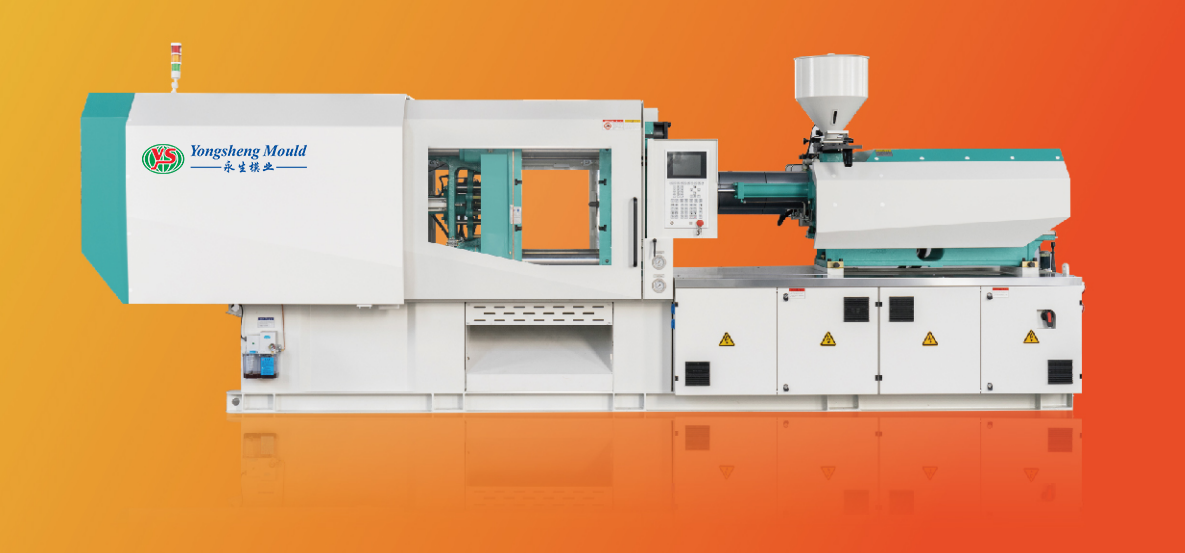
Sizing your equipment requires precise mathematical formulas. You cannot rely on historical guesses or visual estimations. Every variable impacts your final product quality.
Calculating clamp tonnage requires a rigid evaluation framework. You establish the baseline using this formula: Projected Area (sq. in.) × Material Clamp Factor (tons/sq. in.). Different polymers require drastically different clamp factors. Easy-flowing materials need fewer tons per square inch than stiff polymers.
Material Type | Typical Clamp Factor (Tons/Sq. In.) | Flow Characteristic |
|---|---|---|
Polypropylene (PP) | 2.0 - 2.5 | Easy Flow |
ABS | 3.0 - 4.0 | Medium Flow |
Polycarbonate (PC) | 4.0 - 5.0+ | Stiff / High Viscosity |
Always add a strict 10% to 20% safety margin to your baseline calculation. This buffer protects your equipment during pressure spikes. For complex geometries, stop using manual math. We highly recommend utilizing digital Mold Flow Analysis. This software determines precise cavity pressure dynamically. When you size your Injection Molding Machine correctly, accuracy prevents major structural failures.
You must optimize your injection capacity strictly within industry-standard boundaries. Target an injection volume utilizing 20% to 80% of the total barrel capacity. This range represents the optimal performance zone.
Falling Below 20%: This causes excessive residence time. The plastic sits inside the heated barrel for too many cycles. It eventually bakes and degrades.
Exceeding 80%: Pushing the machine to its absolute limit risks incomplete packing. Your final parts will suffer from poor density and structural voids.
Your mathematical calculations mean nothing if the mold physically cannot fit inside the press. You must verify physical compatibility across multiple dimensions.
First, check the tie-bar spacing. Ensure the horizontal and vertical distance between tie bars allows safe mold loading. The crane needs clearance to drop the tool smoothly. Second, evaluate the daylight and opening stroke. Verify the maximum platen opening provides sufficient clearance. The ejector mechanisms need ample room to push the finished part out freely. Robotic arms also require significant clearance to enter and exit safely.
Selecting the drive mechanism represents your most critical architectural decision. Drive systems dictate cycle times, precision, and long-term energy consumption.
Hydraulic presses rely on pressurized oil to generate force. They remain the historical workhorse of the plastics industry.
Strengths: They deliver massive clamping forces reliably. They offer rugged durability for harsh environments. They also feature a significantly lower upfront capital expenditure.
Best for: Large-tonnage requirements suit hydraulics perfectly. We recommend them for automotive bumpers, heavy industrial housings, and thick-wall sections. They excel at managing complex core-pull sequences.
Electric presses utilize servo motors to drive independent axes. They represent the modern standard for high-precision manufacturing.
Strengths: They deliver extreme repeatability across millions of cycles. They provide near-silent operation on the shop floor. They present zero oil risk, making them perfect for cleanrooms. They also consume substantially less energy per cycle.
Best for: High-precision medical devices require electric drives. Thin-wall packaging and micro-molding applications also demand this precision. Facilities highly sensitive to long-term energy overhead should choose electric models.
Hybrid presses blend both technologies into one integrated unit. They aim to capture the primary benefits of both systems.
Strengths: They combine electric precision on the injection unit with hydraulic clamping power. This setup provides fast injection speeds alongside brute pressing force.
Best for: Manufacturers needing flexibility love hybrid machines. They adapt well across varied product lines. They successfully balance energy efficiency with raw operational power.
Many procurement teams make the costly mistake of buying the wrong size press. Sizing errors create permanent operational bottlenecks.
Buying a larger press "just in case" ruins profitability. You must understand the mechanical reality of this decision. Running a small mold in an oversized press causes uneven platen deflection. The massive platens bow around the small tool. This deflection destroys the mold over time. Furthermore, you face a severe energy penalty. Large motors running small shots waste excessive power per cycle. You burn money heating a massive barrel for a tiny amount of resin.
Undersizing your equipment guarantees immediate quality failures. Insufficient clamp force leads to mold separation during injection. This separation results in flash, dimensional instability, and post-processing bottlenecks. Your team will waste hours trimming flash off parts manually. Undersized injection units also struggle constantly. They fail to maintain holding pressure at the end of the cycle. This lack of pressure causes sink marks and voids in the final product.
Summary Chart: Risks of Incorrect Sizing | ||
Sizing Error | Mechanical Impact | Quality & Production Impact |
|---|---|---|
Oversizing | Uneven platen deflection; excessive residence time in barrel. | Mold destruction; thermal degradation of polymers; severe energy waste. |
Undersizing | Mold separation under pressure; insufficient packing force. | Severe flash; sink marks; dimensional instability; part voids. |
Your procurement evaluation must extend beyond the machine itself. You must consider how the equipment integrates into your specific facility footprint.
Acknowledge the harsh reality of shop floor space. A 100-ton press may require 10 feet of length. Meanwhile, a 500-ton press demands 20 feet or more. You cannot just measure the machine base. Account for auxiliary equipment immediately. Robotic automation, water chillers, and material handling hoppers consume significant floor space. Ensure your layout allows maintenance teams to access the rear of the machine safely.
Modern manufacturing requires robust data tracking. Ensure the machine’s Programmable Logic Controller (PLC) can track critical closed-loop metrics. You need real-time data on clamp movement, injection pressure, and cushion repeatability. These metrics remain absolutely necessary for modern quality assurance protocols. Older or cheaper controllers often lack these granular tracking capabilities.
Evaluate OEMs based on their long-term reliability. Check their localized parts availability first. A machine sitting idle waiting for a foreign shipment burns money hourly. Ask about typical technician response times in your specific region. Finally, calculate the long-term cost of replacement consumables. Items like screws, barrels, and toggle pins wear out naturally. Finding a reliable supplier for your Injection Molding Machine requires thorough vetting of their aftermarket support structure.
Purchasing an industrial press remains an exercise in precise matching. You must align physical dimensions, clamping force, and injection capability directly with your mold. The resin dictates the pressure, while the mold dictates the physical space.
We strongly encourage procurement and engineering teams to prioritize overall operational efficiency. Look past the lowest initial sticker price. Evaluate long-term energy use, scrap reduction capabilities, and maintenance accessibility. A cheaper machine often costs significantly more over a ten-year lifespan through energy waste and downtime.
Next Step Action: We recommend engaging with equipment vendors early in your process. Ask them to run a digital Mold Flow Analysis. Alternatively, request a dry-run test of your existing molds on their floor before finalizing procurement. Real-world testing always beats theoretical math.
A: No. Standard machines have barrel capacities too large for micro-parts, leading to excessive residence time and material degradation. Micro-molding requires dedicated, low-tonnage (e.g., 10-50 ton) specialized presses designed specifically for tiny volumes.
A: A polymer's Melt Flow Index (MFI) dictates how easily it fills a mold. Stiff, high-viscosity materials like Polycarbonate require significantly higher injection pressures. This high pressure demands higher clamp tonnage to keep the mold securely closed compared to easy-flowing materials like Polypropylene.
A: Utilizing less than 20% of a machine's shot capacity means the plastic sits in the heated barrel for too many cycles. This residence time bakes the resin, degrading its mechanical properties and causing structural flaws in the finished part.


